

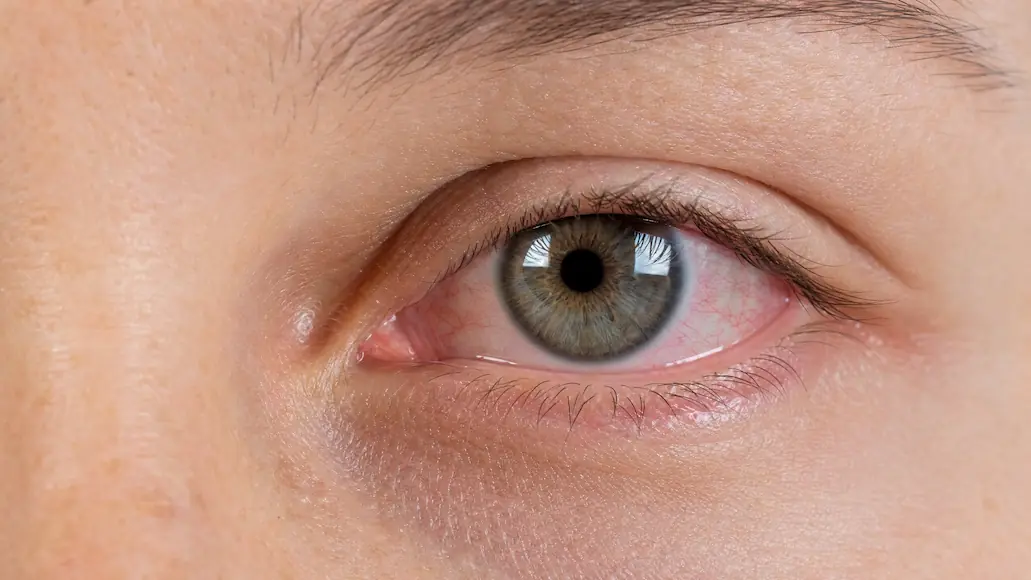
Dry eye procedures in Leeds are clinic treatments for sore, gritty or burning eyes that home care has not settled. Mr Arthur Okonkwo, Consultant Ophthalmologist, first tests which part of the tear film is failing, then matches it to drops, lid treatments, punctal plugs or in-clinic gland and light treatments at St James Laser Vision Clinic in Leeds.
His 12 other treatments are on the treatments page. Dry eye is a common, long-term condition, affecting as many as 1 in 3 people over 65, more often women.
Struggling with Dry Eyes?
Book a consultation with Mr Arthur Okonkwo to find out which part of the tear film is failing and which treatment suits you.
Prefer to call? 0113 460 1923, Monday to Friday, 9am to 5pm
What is Dry Eye?
The tear film has 3 layers: a mucin layer coats the cornea, a watery layer comes from the tear gland under the upper lid, and an oily outer layer slows evaporation.
Dry eye happens in 2 ways: too few tears are made, or tears evaporate too fast. Evaporation is much more common, usually caused by meibomian gland dysfunction (MGD), where the oil glands along the lid margins block. Self-care comes first, with specialist help for dry eyes when an optician or GP cannot find the cause.
Dry Eye Symptoms and When to Get Urgent Help
Eyes may feel itchy, sore, gritty, red, blurry, light-sensitive or unusually watery, and blurring often clears on blinking. Watering can seem odd in a dry eye, but it is reflex tearing.
| Your symptom | Possible cause | What to do |
|---|---|---|
| Gritty, burning or watery eyes that come and go | Dry eye or blepharitis | Home care and a pharmacist, then optician or GP |
| Sore, crusted eyelids stuck together on waking | Blepharitis | Clean the lids twice a day; GP if no better |
| Dry eyes with a dry mouth, tiredness or joint pain | Possible Sjögren’s syndrome | GP appointment |
| Painful red eye, especially with contact lenses | Possible infection | Urgent GP appointment or NHS 111 |
| Wavy lines, flashing, sight loss or pain from light | An eye emergency | Call 999 or go to A&E |
Conditions Mr Okonkwo Treats
- Meibomian gland dysfunction: blocked oil glands, often the underlying problem in blepharitis.
- Evaporative or aqueous-deficient dry eye: tears that dry too fast because the oily layer is thin, or too little watery tear from the gland under the upper lid.
- Blepharitis: inflamed lid rims that come in repeated episodes. See blepharitis.
- Ocular rosacea: sore eyelids and crusts at the lash roots are among the signs of rosacea.
- Sjögren’s syndrome: dry eyes and a dry mouth, needing regular eye checks.
- Severe surface damage from dryness: may need amniotic membrane transplantation as a short-term cover.
Treatment Options for Dry Eye
Treatment follows 6 steps, from home care up to clinic procedures if needed.
Lubricating Drops, Gels and Ointment
Artificial preservative-free tears suit mild to moderate dry eye. Drops give the shortest relief, ointments and gels give longer relief but temporarily blur sight.
Lid Hygiene and Warm Compresses
These treat blocked oil glands at home: a heated eye bag for 10 minutes, or a hot flannel for 5 minutes twice a day. Clean the lids twice daily for 2 weeks, then less often, and never use water hot enough to burn.
Punctal Plugs
Tiny plugs placed in the tear drainage openings at the inner corners of the lids keep tears on the eye longer, for more severe dry eye. Insertion takes seconds in the Leeds clinic, with no recovery time.
In-Clinic Light and Gland Treatments
Intense pulsed light (IPL) passes pulses of light over the skin of the lower lids and cheeks, with shields over the eyes, to calm lid inflammation and warm the glands so the oil flows. Gland expression presses blocked glands clear, and each treatment takes about 10 to 20 minutes, with mild, short-lived redness or blur.
Prescription Anti-Inflammatory Treatment
For severe dry eye that tear substitutes have not helped, a prescription anti-inflammatory eye drop is recommended for adults in NICE TA369.
Serum Drops or Amniotic Membrane for Severe Cases
Serum eye drops, supplied through NHS Blood and Transplant, are made from a patient’s own blood or a donor’s, when standard drops give no relief. A membrane cover is another option for a damaged surface.
Not Sure Which Dry Eye Treatment Is Right for You?
Book a Leeds dry eye assessment if symptoms have lasted beyond a few weeks of home care, and bring every drop you use.
Prefer to call? 0113 460 1923, Monday to Friday, 9am to 5pm
Why Patients Choose Mr Okonkwo
- Specialist areas: cornea, cataract and refractive surgery, as a Leeds Consultant Ophthalmologist with dual fellowship training.
- Further study: PgCert (MedEd), PgDip (CRS) with Distinction, CertLRS, FRCOphth and a transplantation MRes.
- Fellowships: the Royal Victorian Eye and Ear Hospital in Melbourne, and Moorfields Eye Hospital in London.
- Leeds roles: leads NHS and private clinics in Leeds Teaching Hospitals NHS Trust, and is an honorary senior lecturer at the University of Leeds.
- Research: 30-plus peer-reviewed articles, with international research grants and prizes.
Can Dry Eye Be Fixed for Good? Realistic Expectations
Usually not: for most people, dry eye is controlled rather than ended. Blepharitis can last for many years and comes in repeated episodes, yet strict routines keep symptoms in check, and stopping them brings symptoms back. Clinic procedures can reduce reliance on drops, but maintenance continues.
Daily habits help: during screen work, every 20 minutes look 20 feet (about 6 metres) away for 20 seconds. Set the monitor a little lower than your eyes, add a humidifier, and limit time in air-conditioned, heated, smoky or dusty rooms. Omega-3 may help if your diet lacks it. Wear wraparound sunglasses outdoors, and for aeroplane cabins and offices see his blog on AC and dry eyes.
Alternatives to Dry Eye Procedures
Try home treatment for a few weeks before seeing an optician or GP.
- Pharmacist advice: drops, gels or ointments bought over the counter.
- Contact lens breaks: glasses for a while to rest the eyes.
- Medicine review: some antidepressants and blood pressure medicines dry the eyes, but only stop one on medical advice.
- Daily lid cleaning: warm flannel, a 30-second lid massage, then wiping the lid edges.
- No treatment: mild symptoms may simply be watched, as dry eye is not usually serious.
Your Dry Eye Pathway, Step by Step: First Appointment to Follow-Up
- Referral: an optician or GP letter helps but is not essential privately, while NHS referrals come from a GP or optician.
- First appointment: about 45 to 60 minutes covering symptoms, screen use, medicines and the drops you have tried. Bring your current drops.
- Tests and plan: tear film tests and a slit lamp examination, then Mr Okonkwo explains your type of dry eye and the steps; dilating drops blur sight, so arrange a lift.
- Procedure day: plugs, gland expression or light treatment in clinic, usually 10 to 20 minutes, then home.
- Follow-up: reviews at St James to adjust the plan, because dry eye is an ongoing condition.
Recovery and Risks After Dry Eye Procedures
Most clinic procedures need no recovery time, though short-lived redness or briefly altered vision can follow gland expression or light treatment.
| Treatment | Hospital stay | Example risk |
|---|---|---|
| Lubricating ointment | None, used at home | Blurred vision, so use it at night |
| Warm compresses | None, used at home | A burn if the water is too hot |
| Light treatment or gland expression | None, 10 to 20 minutes in clinic | Short-lived redness or briefly altered vision |
| Punctal plugs | None, inserted in seconds in clinic | Short-lived irritation |
| Steroid drops | None, used at home | Cataract or raised eye pressure, so only under an ophthalmologist |
Where Mr Okonkwo Sees Patients
Dry eye appointments and in-clinic procedures run at St James Laser Vision Clinic, part of St James’s University Hospital, Leeds.
| Location | Address |
|---|---|
| St James Laser Vision Clinic | Floor 4, Gledhow Wing, St James’s University Hospital, Beckett Street, Leeds LS9 7TF |
Lines open 9am to 5pm on weekdays on 0113 460 1923. Outside those times, use NHS 111 for eye advice and 999 for emergencies.
FAQs About Dry Eye Procedures
Are dry eye procedures major surgery?
No. They are clinic treatments of about 10 to 20 minutes, with plugs inserted in seconds and no hospital stay.
How long is recovery after a dry eye procedure?
Usually there is none. Some people have mild redness or blur for a short time after gland expression or light treatment.
Can I drive home after a dry eye appointment?
Not if dilating drops were used, as they blur sight for several hours; otherwise, once your vision is clear.
Will my dry eye come back after treatment?
Often, yes, without upkeep, because blepharitis symptoms recur if the routine stops.
Is there an alternative to clinic procedures for dry eye?
Yes. A few weeks of home care, lid cleaning and pharmacy drops come first.
Why do my eyes water if they are dry?
Reflex tearing. Poor-quality tears evaporate, the surface feels irritated, and the main tear gland floods the eye with watery tears.
What do punctal plugs actually do?
They partly or fully block the small drainage openings at the inner corners of the lids, so your tears and drops stay on the eye longer.
Is intense pulsed light safe near the eyes?
Shields cover the eyes while the light is applied to the lids and cheeks, and your skin type and side effects are checked at your Leeds assessment.
Should I use drops, gel or ointment?
Drops act shortest but keep vision clear, ointment lasts longest but blurs, and gels sit between. Ointment suits night-time.
Do omega-3 supplements help dry eyes?
Possibly, if your diet lacks omega-3.
Quick Info
What is it?
Tests to find the type of dry eye, then targeted treatment
Who is it for?
Dry eyes still troublesome after a few weeks of home treatment
How long does it take?
Assessment 45 to 60 minutes; most procedures 10 to 20 minutes
Hospital stay
None: procedures are done in the outpatient clinic
Recovery
Usually none, with brief redness or blur after some treatments
Ready to Get Started?
Book a consultation to discuss your symptoms and treatment options.
Book a Consultation with Mr Arthur Okonkwo
Book a Leeds dry eye assessment if symptoms have lasted beyond a few weeks of home care, and bring every drop you use.
- Call: 0113 460 1923 on weekdays between 9am and 5pm
- Book online: request a dry eye assessment, or ask a question first
A painful red eye, especially with contact lenses, needs an urgent GP or optician visit, or NHS 111. Flashing lights, sight loss, an eye injury or sepsis signs call for 999 or an emergency department.