

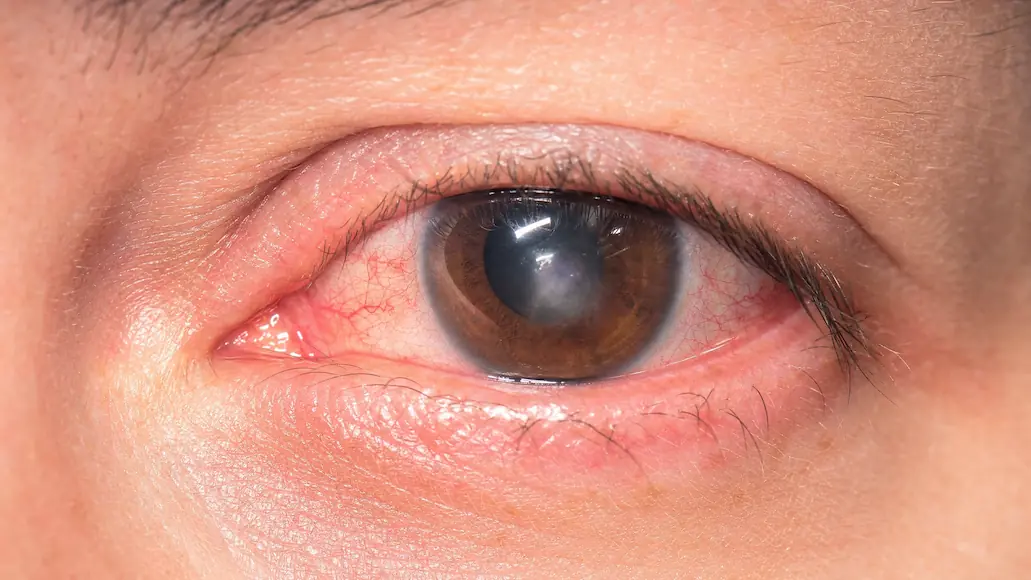
Corneal infections and ulcers need eye-specialist treatment the same day, because an infected cornea can scar within days. Bacteria, viruses, fungi or an amoeba called acanthamoeba can cause an open sore on the clear front of the eye. Mr Arthur Okonkwo, Consultant Ophthalmologist, treats corneal infection at St James Laser Vision Clinic in Leeds.
Most of these infections are linked to contact lens wear, and fewer to a scratch or an existing eye problem. Such appointments are prioritised, and if you cannot be seen today, go to the Leeds eye casualty or A&E rather than wait. For planned care, see his treatments list.
Worried About a Corneal Infection?
Book for a suspected corneal infection, or follow-up after the Leeds eye casualty, and bring your lenses, their case and all your drops.
Prefer to call? 0113 460 1923, Monday to Friday, 9am to 5pm
What Are Corneal Infections and Ulcers?
The cornea is the transparent dome over the coloured part of the eye, and an infection of it is called microbial keratitis. It often follows poor lens cleaning or storage, misuse of disposable lenses or sleeping in lenses.
An ulcer forms where the infection breaks through the surface layer, seen as a small white spot, and the eye grows more painful as the ulcer develops.
Herpes simplex, the cold sore virus, is a separate cause that usually affects 1 eye and can return.
Symptoms of a Corneal Infection and When to Get Urgent Help
A red eye in a contact lens wearer needs an urgent appointment that day. Light that hurts, or blurring or loss of vision, calls for 999 or A&E.
| Your symptom | Possible cause | What to do |
|---|---|---|
| Red, painful eye while wearing contact lenses | Possible lens-related infection | Lenses out; urgent GP, optician or NHS 111 |
| Grit, then rising pain and a white spot | Corneal ulcer | Same-day eye casualty or A&E |
| Severe pain and watering after swimming in lenses | Possible acanthamoeba keratitis | Same-day eye casualty or A&E; take your lens case |
| Painful red eye with eyelid blisters | Possible herpes simplex eye infection | Urgent GP appointment or NHS 111 |
| Sudden loss of vision, or one pupil bigger | An eye emergency | Call 999 or go to A&E |
Conditions Mr Okonkwo Treats
- Bacterial keratitis: the most common type in lens wearers, treated with antibiotic drops.
- Viral keratitis: usually herpes simplex, treated with antiviral medicine, sometimes with steroid drops.
- Fungal corneal ulcers: less common, and treated with antifungal drops instead of antibiotics, once the scrape confirms them.
- Acanthamoeba keratitis: an amoeba found in water, with around 85% of cases linked to contact lens wear.
- Contact lens-related infections: any of the above, started by poor hygiene, water or overnight wear, and most of the ulcers seen in Leeds.
- Marginal keratitis: small white ulcers at the edge of the cornea, usually linked to blepharitis.
- Corneal scarring: a scar left once infection clears, with repair options on corneal transplantation.
Treatment Options for Corneal Infections
A corneal scrape usually comes first: under numbing drops, a sample is taken from the ulcer so the laboratory can name the organism within 48 to 72 hours.
Intensive Antibiotic Drops
Antibiotic drops are the usual treatment for bacterial keratitis and start before the 48 to 72 hour results return. They may be needed up to every hour, through the night if the infection is severe. Treatment is at home with frequent checks, and the drops may change if there is no improvement.
Antiviral or Antifungal Treatment
Herpes simplex keratitis is treated with antiviral ointment, drops or tablets, and after a GP referral you are usually seen the same day, with most cases settling within a couple of weeks.
Anti-Amoebic Antiseptic Drops
Acanthamoeba does not respond to antibiotics, so antiseptic drops with an anti-amoebic effect go in hourly for the first few days, including overnight, then less often. Treatment lasts 3 to 6 months when started quickly. About 10% of these infections also carry bacteria, needing antibiotics too.
Steroid Drops Once Infection Is Under Control
Steroid drops can calm inflammation and scarring, but they may slow the clearing of infection and can cause cataract and raised eye pressure, so they are added carefully once the infection is responding.
Surgery for Thinning, Perforation or Scarring
Surgery is kept for an ulcer that thins, perforates or leaves a dense central scar, with 2 main options: amniotic membrane transplantation to help healing, or a therapeutic cornea transplant.
Need Treatment or Follow-Up for a Corneal Infection?
Mr Arthur Okonkwo will talk you through the options that suit your eye at your consultation.
Prefer to call? 0113 460 1923, Monday to Friday, 9am to 5pm
Why Patients Choose Mr Okonkwo
- Specialty: corneal disease is one of his core areas as a dual fellowship-trained Consultant Ophthalmologist in Leeds.
- Postgraduate awards: FRCOphth, CertLRS, an MRes in transplantation, a PgDip in cataract and refractive surgery, and a medical education PgCert.
- Fellowships: Moorfields Eye Hospital, and Melbourne’s Royal Victorian Eye and Ear Hospital, after academic posts in Manchester and Leeds.
- NHS practice: consultant at Leeds Teaching Hospitals NHS Trust, running NHS and private clinics and taking GP and optician referrals.
- Teaching and papers: Honorary Senior Lecturer at the University of Leeds, and over 30 peer-reviewed articles.
Contact Lenses and Infection Risk
Contact lens wear is the most common link, and around 85% of acanthamoeba cases are linked to lens wear, and water is the main trigger: swimming, showering or rinsing lenses in tap water. It is still rare, at about 2 in 100,000 UK lens wearers a year, though cases have risen three-fold since 2011.
Take lenses out every night and before swimming or showering. Never rinse lenses or cases in tap water; use fresh solution, and use daily disposables once only.
After an infection, stay out of lenses for a few weeks and have a fit check before starting again. After acanthamoeba, daily disposables are usually the safer choice, often after several months.
Alternatives and Milder Eye Problems
There is no safe alternative to prompt treatment for an infected corneal ulcer, though some milder red eyes do not need it.
- Conjunctivitis: a pharmacist can usually advise on conjunctivitis, if the eye is not painful or light-sensitive.
- Marginal keratitis: lid hygiene treats the blepharitis behind it, with steroid drops if needed.
- Dry, gritty eyes: these overlap with early infection symptoms, covered on dry eye procedures.
- Watching at home: only when the eye is red but not painful and sight is normal.
Your Pathway, Step by Step: Same-Day Appointment to Follow-Up
- Same day: call 0113 460 1923 in office hours. If no slot is free today, head to eye casualty or A&E, or use NHS 111. A referral helps but is not always needed privately.
- Examination: slit-lamp checks at St James, with dye to show the ulcer, so take your lenses and their case.
- Tests: a corneal scrape under numbing drops, and sometimes a swab for acanthamoeba DNA, with results in 48 to 72 hours.
- Your plan: Mr Okonkwo explains the likely organism, the drop schedule and the warning signs, then you agree the plan.
- Treatment and checks: drops start at once, with checks that can be daily at first.
Recovery and Risks for Corneal Infections and Ulcers
Microbial keratitis can leave a scar and affect vision, even with correct treatment, and at a specialist centre around a quarter of people with acanthamoeba have some permanent sight loss, and about 1 in 4 go on to a corneal transplant.
Herpes simplex keratitis usually settles in a couple of weeks but often comes back, and full visual recovery can take many months while scar tissue settles.
| Treatment | Hospital stay | Example risk |
|---|---|---|
| Antibiotic drops for bacterial keratitis | Home, with frequent clinic checks | A scar that can affect vision |
| Antiviral treatment for herpes simplex | Seen the same day, treated at home | Repeat infections, and scarring if they keep returning |
| Anti-amoebic drops for acanthamoeba | Home, drops hourly at first | Some permanent sight loss in around a quarter |
| Steroid drops added later | Home | Slower clearing of infection, cataract or raised pressure |
| Corneal transplant after acanthamoeba | Most go home the same day | About 1 in 4 cases at a specialist centre |
Where to Be Seen in Leeds
Planned and follow-up appointments take place at St James’s University Hospital. Same-day emergencies out of hours go to an eye casualty or A&E, or phone NHS 111.
| Location | Address |
|---|---|
| St James Laser Vision Clinic | Floor 4, Gledhow Wing, St James’s University Hospital, Beckett Street, Leeds LS9 7TF |
| Out of hours | Nearest emergency department, 999 or NHS 111 |
The practice phone, 0113 460 1923, is staffed on weekdays from 9am until 5pm.
FAQs About Corneal Infections and Ulcers
Is a corneal ulcer an emergency?
Yes. It can affect sight and scar if not treated, so get same-day help from eye casualty or A&E, or ring NHS 111.
How long does recovery from a corneal ulcer take?
Several weeks for most infections, with drops cut back as the ulcer shrinks. Acanthamoeba treated early takes 3 to 6 months, and longer for complex cases.
Can I drive with a corneal infection?
Only if you meet the legal standard: a number plate readable at 20 metres, and 6/12 vision with both eyes open. Ask at clinic first.
Can a corneal infection come back?
It can. Herpes simplex infections often return, and marginal keratitis can recur too, so keep up lid hygiene even without symptoms.
Is there an alternative to the eye drops?
Not for an infected ulcer, where drops are the main treatment, and surgery is kept for thinning, perforation or dense scarring.
What does private treatment for an eye infection cost?
No 2026 price list is published online. Call 0113 460 1923 to ask before you attend.
Is treatment for a corneal ulcer major surgery?
Usually not, as most infections caught early are treated with drops alone in Leeds.
How often will I need to put the drops in?
At first, up to every hour and sometimes through the night, easing as the ulcer shrinks.
When can I wear contact lenses again?
Not until a few weeks after the infection clears, and only after a lens fit check. For herpes simplex, wait 24 hours after symptoms go.
Why is a scrape of the cornea taken?
It names the organism within 48 to 72 hours, so the right drop is chosen. Numbing drops are used first.
Can acanthamoeba spread to my other eye?
Usually not, as both eyes are affected only when both were infected at the same time.
Quick Info
What is it?
An infection of the cornea, often with an ulcer like a small white spot
Who is it for?
Anyone with a painful red eye and blurred sight, especially lens wearers
How long does it take?
Scrape and first drops on the day; lab results in 48 to 72 hours
Hospital stay
Usually treated at home with drops and frequent clinic checks
Recovery
Weeks for most infections; 3 to 6 months for acanthamoeba
Ready to Get Started?
Book a consultation to discuss your symptoms and treatment options.
Book an Urgent Consultation with Mr Arthur Okonkwo
Book for a suspected corneal infection, or follow-up after the Leeds eye casualty, and bring your lenses, their case and all your drops.
- Telephone: 0113 460 1923, Monday to Friday, 9am to 5pm
- Online: request an appointment or write to the practice
A very painful red eye needs an urgent GP or optician appointment, or NHS 111. Sudden sight loss, an injury to the eye or sepsis signs need 999 or the emergency department.